PS
Patricia S, Dallas
Toradol was a great purchase.
Was this review helpful to you?


| Quantity | Price per tablet | You save | Total price | |
|---|---|---|---|---|
| 60 | $0.70 | - | $42.10 | |
| 90 | $0.58 | $11.15 | $52.00 | |
| 120 | $0.53 | $21.10 | $63.10 | |
| 180 | $0.45 | $44.50 | $81.80 | |
| 270 | $0.41 | $77.45 | $112.00 | |
| 360 | $0.39 | $111.10 | $141.50 |
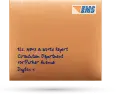
We carefully pack each order and ship it within 24 hours. Below is an example of a standard package.
The packaging measures 9.4x4.3x0.3 inches (24x11x0.7 cm), similar to a standard personal envelope, and conceals its contents.


| Shipping Method | Estimated delivery |
|---|---|
| Express Free for orders over $300.00 | Estimated delivery to the U.S.: 4-7 days |
| Standard Free for orders over $200.00 | Estimated delivery to the U.S.: 14-21 days |










Toradol is the brand name under which we carry oral ketorolac 10 mg tablets, a nonsteroidal anti-inflammatory drug (NSAID) used for the short-term management of moderately severe acute pain. When you shop with us, the available medicine is the 10 mg oral tablet; the commercial choice is among six package quantities ranging from 60 to 360 pills. Package quantity must remain separate from dosing, however, because oral ketorolac has a strict treatment limit and every package we offer contains more tablets than would be used during one labeled course.
Below, we explain how our package sizes compare by total cost and unit value, how the offered quantities relate to ketorolac's short-term dosing limits, how Toradol compares with generic ketorolac and other pain relievers, and what to expect from our ordering and delivery process.
Our current offer includes 60, 90, 120, 180, 270, and 360 pills. The comparison below presents the exact current cost, price per tablet, and relative savings for each quantity. These are package-purchasing options, not recommended treatment quantities: ketorolac dosing and duration must come from a prescriber and should never be determined by how many tablets are in the package.

The price per tablet generally improves as package quantity increases, but the lowest unit price is not automatically the best clinical or practical value. All six packages exceed the amount needed for a single course under ketorolac's maximum five-day treatment limit. Before selecting a quantity, consider the prescribed amount, expiration date, secure storage, and the likelihood that unused tablets will remain. Do not extend a course or plan repeat courses simply to use a larger package.
Oral ketorolac carries some of the strictest duration limits among commonly prescribed NSAIDs. In US labeling, the tablets are used only as continuation treatment after intravenous or intramuscular ketorolac. The combined duration of injectable and oral treatment must not exceed five days.
For adults ages 17 through 64, labeled oral transition dosing may begin with 20 mg once, followed by 10 mg every four to six hours as needed, with no more than 40 mg in one day. Older adults, people weighing less than 50 kg, and people with renal impairment require more cautious dosing, including a 10 mg initial oral transition dose. The prescriber determines the appropriate regimen according to age, weight, kidney function, prior injectable treatment, and clinical response. Patients should not increase the dose or continue treatment beyond the prescribed period.
At the maximum oral daily dose, no more than four 10 mg tablets are taken per day. Even a theoretical five full days at that maximum would use no more than 20 tablets, and the actual oral portion is normally shorter because the five-day limit includes the preceding injectable treatment. A 60-pill package therefore already exceeds the amount required for one labeled course.
When considering the offered quantities, keep these points in view:
The larger quantities in our offer may have a lower unit cost, but value must account for the substantial likelihood of unused medicine. Select a package only after comparing its quantity with the prescribed course and considering safe storage and disposal of any tablets that will not be used.
Toradol contains the same active ingredient, dosage form, route, and strength described generically as ketorolac 10 mg oral tablets. Brand and generic products with the same active ingredient and strength may still differ in manufacturer, appearance, packaging, and inactive ingredients. Anyone with an allergy or sensitivity to an inactive ingredient should check the supplied product information or consult a pharmacist.
Ketorolac belongs to the NSAID family, which also includes ibuprofen, naproxen, diclofenac, and celecoxib. Other analgesic options include acetaminophen and, for selected cases of more severe pain, opioid medicines such as tramadol. These products are not interchangeable dose for dose. Ketorolac is distinguished by its role in moderately severe acute pain and its strict five-day maximum, making it unsuitable for routine headaches, minor everyday discomfort, or long-term arthritis treatment. A prescriber should choose an alternative according to pain severity, inflammation, medical history, kidney and cardiovascular risk, bleeding risk, and other medicines being used. Readers exploring broader options can browse our pain relief listings.
Ketorolac is indicated for the short-term management of moderately severe acute pain that requires analgesia at the opioid level, commonly in settings such as recovery after surgery or another significant acute pain event. The oral tablets are continuation therapy after intravenous or intramuscular ketorolac rather than initial treatment.
Ketorolac is not intended for chronic or minor pain, preventive use before major surgery, obstetric pain during labor and delivery, or treatment lasting longer than five days. It is also not a substitute for investigating persistent, worsening, or recurrent pain. Related medicines with different indications and risk profiles can be viewed in our anti-inflammatories listings.
Ketorolac inhibits cyclooxygenase enzymes, commonly described as COX-1 and COX-2. This reduces production of prostaglandins involved in pain, inflammation, fever, stomach protection, kidney blood flow, and platelet function. The same mechanism that provides analgesic and anti-inflammatory effects also contributes to ketorolac's gastrointestinal, bleeding, cardiovascular, and renal risks.
Pain relief after an oral dose generally begins within about 30 to 60 minutes, with analgesic effects commonly lasting approximately four to six hours. Take the tablets exactly as directed. They may be taken with food or milk if stomach upset occurs, but food does not eliminate the risk of ulcers or gastrointestinal bleeding. Swallow each dose with water, use the lowest effective dose for the shortest prescribed period, and do not take extra tablets to obtain faster relief.
If a dose is missed, follow the prescriber's or pharmacist's instructions rather than doubling the next dose. Treatment should stop when directed and no later than the end of the combined five-day injectable-plus-oral period. Persistent or uncontrolled pain requires clinical reassessment, not an extended ketorolac course.
Ketorolac can cause serious gastrointestinal bleeding, ulceration, kidney injury, cardiovascular events, and bleeding complications, sometimes without warning. The risks increase with higher doses, longer exposure, older age, dehydration, and certain medical conditions or interacting medicines. Important restrictions include the following:
Do not combine ketorolac with aspirin or another NSAID, including ibuprofen, naproxen, or diclofenac, because this raises the risk of serious adverse effects without providing an appropriate additional benefit. Anticoagulants, antiplatelet medicines, corticosteroids, selective serotonin reuptake inhibitors, and serotonin-norepinephrine reuptake inhibitors can further increase bleeding risk. Ketorolac may raise lithium and methotrexate exposure, reduce the effects of some diuretics and blood-pressure medicines, and worsen kidney function when combined with ACE inhibitors, angiotensin receptor blockers, or diuretics, especially in older or dehydrated patients.
Concomitant use with probenecid or pentoxifylline is contraindicated. A prescriber or pharmacist should review all prescription medicines, nonprescription pain relievers, vitamins, and supplements before treatment. Monitoring may include kidney function, blood pressure, signs of gastrointestinal bleeding, blood counts when clinically appropriate, and the patient's response to pain treatment.
Seek urgent medical help for vomiting blood, black or bloody stools, severe abdominal pain, chest pain, shortness of breath, one-sided weakness, facial or throat swelling, a severe rash, markedly reduced urination, or other signs of a serious reaction. Store the tablets at 68°F to 77°F; excursions between 59°F and 86°F are permitted. Protect them from light and keep the container tightly closed.
Ketorolac is authorized for human medicinal use in the United States, and oral ketorolac tablets are classified as prescription medicine. A licensed prescriber must determine whether this treatment is appropriate and provide the dosing instructions. Package size does not change that prescription classification or the five-day treatment limit.
Our product-specific requirement for accepting an order is communicated through our ordering process. Follow the documentation prompts shown during checkout, or ask our support team what information is needed before submitting an order. Our pharmacist-supported team is available 24/7 by phone, online chat, or email to answer questions about the process and provide general medication support. Questions about diagnosis, whether ketorolac should be prescribed, or changes to an individual regimen must be directed to the treating prescriber.
After you select one of the available package quantities, our checkout carries that exact option through the ordering process. Review the strength and pill count carefully before submitting the order, follow the checkout prompts for any requested documentation, and provide an accurate US delivery address and contact information. We have supported customers since 2008 as Ireland RX, and our support desk operates 24/7 across email, online chat, and phone.
Orders are packed securely before dispatch. Our team remains available if a question arises about checkout, payment, packing, dispatch, or delivery. A pharmacist is also available for general questions about Toradol, storage, interactions, and how to read the supplied directions, although this support does not replace the prescriber who selected the treatment.
Before ordering, it is useful to have the following ready:
Value with Toradol 10 mg is not simply the lowest price per tablet. It means comparing the six available quantities with the prescribed number of doses, the strict treatment ceiling, the expiration date, and the likelihood that tablets will remain unused. Because even the smallest 60-pill package exceeds the amount needed for one labeled course, no package should be interpreted as a recommended course quantity.
The package-and-price comparison above is the exact reference for our current offer. A larger package may reduce unit cost, but it also increases the amount requiring secure storage and may create avoidable waste. Do not use remaining tablets for another episode, give them to another person, or extend treatment without new clinical direction. Ask a pharmacist about safe disposal when tablets are expired or no longer needed.
Once you have reviewed the prescribed course and selected the most practical available quantity, our checkout and support team can help with the ordering process. The final decision should balance package value with appropriate short-term use rather than treating maximum quantity as maximum value.

| Active ingredient | Ketorolac |
|---|---|
| Drug class | Nonsteroidal anti-inflammatory drug (NSAID) |
| Dosage form | Tablet |
| Available strengths | 10 mg |
| Route of administration | Oral |
| Storage | Store at 68°F to 77°F; excursions permitted between 59°F and 86°F. Protect from light and keep the container tightly closed. |
| ATC code | M01AB15 |
This product has 5 ratings, but only 2 written reviews so far. Share your experience and help other customers.
Toradol was a great purchase.
The outer parcel was slightly dented, but the inner packaging was intact.

